


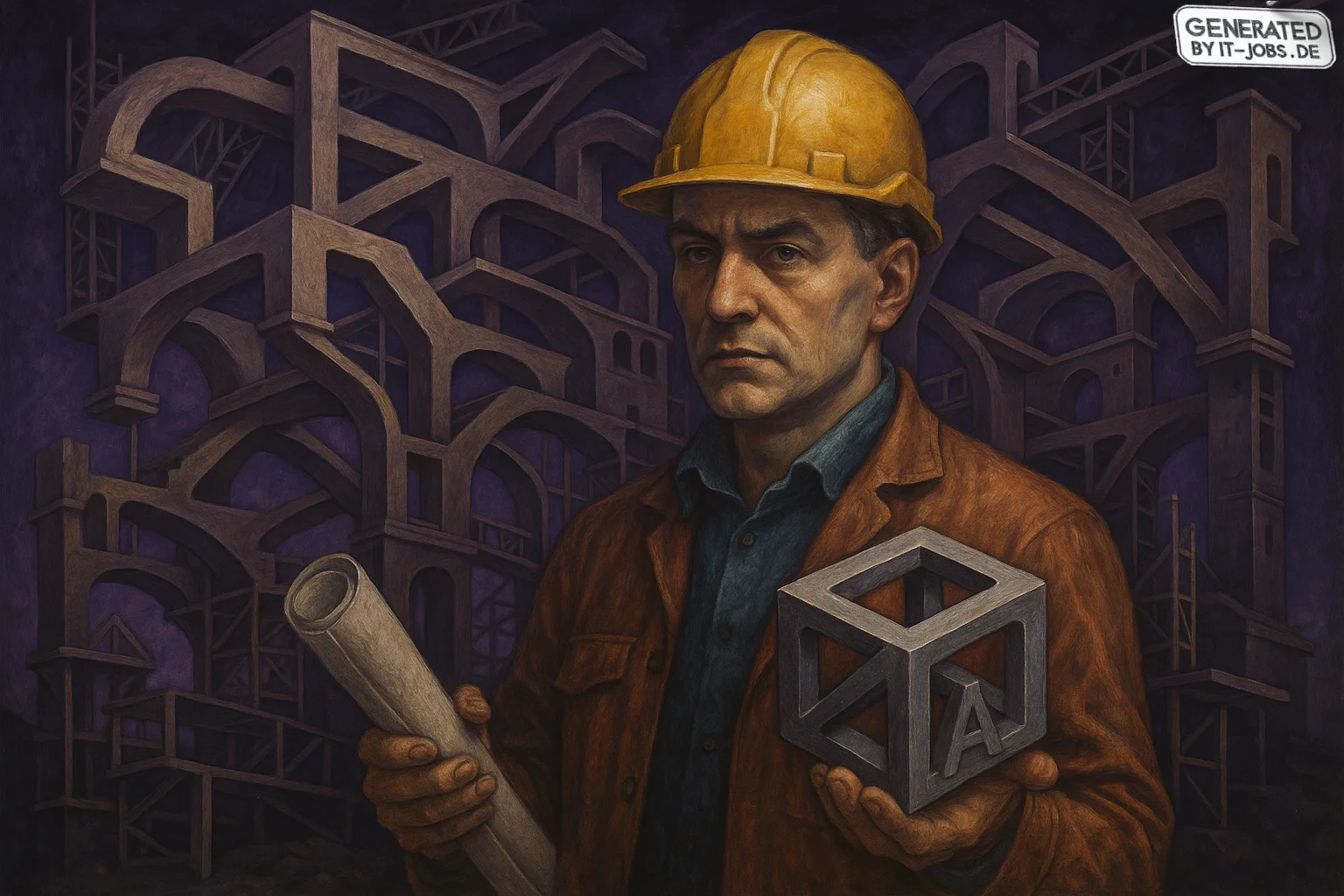
What Role Do Artificial Intelligence Specialists Play in the Construction Industry?
"I said I'm a specialist in AI for the construction industry, not an undercover stand-up comedian building a new audience."

Introduction to AI in Construction
Welcome to the AI revolution in construction, where algorithms come armed not with hammers, but with the precision of a million laser levels. In the realm of concrete and cranes, Artificial Intelligence (AI) doesn't just fit in like another flashy app on your smartphone; it's the all-seeing eye that scrutinizes, optimizes, and revitalizes construction practices with a finesse that would make even the digital Da Vinci blush. No longer is construction about simply piling bricks and hoping for the best; it's about weaving data-driven magic spells that seemingly materialize efficiency and safety from the chaos of computations.
So, what exactly is AI doing at our construction sites? Picture this: amidst the symphony of hard hats and jackhammers, AI waltzes in as the conductor, orchestrating the discordant notes into a coherent masterpiece of productivity. Historically, the construction industry’s tech uptake has mirrored that of a sloth after a hearty meal. But with AI swooping in on its shiny silicon steed, the script is flipping faster than a two-week project delays yet again. Now, with drones offering hawk-eye perspectives and digital twins double-taking on every blueprint, AI turns tidal waves of data into things of wonder. I mean, who needs a crystal ball when you've got predictive models that forecast your project's future while sipping a cup of perfectly brewed algorithmic espresso?
Think of AI as the Sherlock Holmes of scheduling woes, unraveling complexities with ease and tackling construction conundrums way before they escalate into spreadsheet burnout. Thanks to AI's suave integration, project management ditches its dusty scrollbar of gantt charts for a slick interface of anticipatory insights. Building Information Modeling (BIM) gets its groove on with AI, making traditional design methodologies feel like chiseling on stone tablets. Safety, too, is no longer just a box to tick; it's an AI-powered mission on a nano-second timetable to outmaneuver mishaps like a ninja in a high-vis jacket. With sensor networks humming in harmony with algorithms, hazards are sniffed out and squashed with the same verve as this morning’s stale croissant.
Lest ye think this is all futuristic fantasy, behold the numbers: a McKinsey analysis forecasts that AI implementation can hoist construction productivity by an eye-watering 20% and trim workplace accidents by a quarter. Talk about calling in the cavalry! This neural network-infused renaissance positions construction as a nascent realm, where hardhats sync with high-tech, and where peeking over the project's edge reveals vistas of innovation and efficiency hitherto unimagined. You might say: if AI isn't the Rosetta Stone for the industry's bustling evolution, we'll eat a blueprint.
In this Eden of algorithms, from resource allocation that’s as optimized as a Swiss watch, to coffee breaks that run smoother than a newly paved driveway, AI is reshaping the way we hammer and nail. Oh, it’s not just adding zeros to balance sheets, but gingerly nudging ingenuity past conventional limitations. As we march onward in the construction carnival, AI is there at the forefront, turning each new challenge into a carefully architected opportunity. Now that, dear reader, is what we call a master plan for success.
AI Specialists: The Key Players
In the dazzling circus that is modern construction, AI specialists stand out as the unmistakable ringmasters, deftly coordinating a spectacle of data and innovation. Ditching the traditional hard hat for something more akin to a neural network helmet, these digital mavens aren't content with being mere players on the construction stage—they're the headline act. And why not? They're the ones who transform those grand architectural dreams into palpable reality, faster than a returning boomerang can shout, "Bob the autonomous builder!"
These techno-wizards manage a magical blend of cutting-edge capabilities and practical sensibilities, a bit like that translation app that saved you from eating escargots by accident in the heart of Paris. AI specialists skilfully decipher complex data languages and turn them into actionable insights that streamline costs, cut project timelines down like a master sculptor, and refine workflows with the precision of a Rolex constructor. They are the unseen puppeteers running the show, tweaking levers, fine-tuning buttons, and ensuring that everything—from project planning to safety enhancements—runs smoother than a greased lightning bolt. Yes, think of them as the all-important human interface between artificial and actual intelligence, channeling that technical ‘oomph’ that enables machines to lift, sort, and build with unmatched efficiency.
With AI specialists at the helm of this digital transformation, the construction industry is not just getting by; it’s redefining resilience amid challenges. When project managers lose sleep over potential delays, these AI maestros swoop in with predictive models more insightful than a crystal ball on NASA's payroll. Armed with evolving, self-learning algorithms that make your typical caffeine-run Evolvere Renaissance pale in comparison, they're the unsung heroes shortening those inefficiencies like a boss—because who wouldn’t want Neural Network Nostradamuses on their speed dial?
Responsibilities and Impact
AI specialists in the construction field take on a diverse portfolio that would make even a Swiss Army knife feel a bit insecure. They develop sophisticated algorithms, create predictive models, and breathe life into AI system integrations. With ventures that can predict the impossible—like a shortage of capybara-engraved coffee mugs—they ensure that AI wrestles with and enhances project data, foresees potential delays, and identifies patterns that help make informed decisions. Take, for instance, machine learning — they can whip up systems that predict how much concrete you'll need or catch those design gremlins before they send everyone back to the drawing board 보다 expensive virtual headaches.
But these specialists aren’t just tied to their keyboards and code. They roll up their sleeves and dive into collaborations with engineers, project managers, and other stakeholders like a skilled diplomat in e-world order. From customizing neural network topologies to refereeing the classic "AI vs. human project managers" showdown at the water cooler, they’re essentially indispensable. Their efforts yield measurable, deliciously scrumptious impacts on the construction scene, making projects less prone to errors and introducing dynamic scheduling systems that ward off costly overruns. And let's not forget the coffee machine that could grace everyone’s trailer—all thanks to their wizardry. Delving into enormous datasets, they create efficient ecosystems where each nail, bolt, and beam gets allocated with divine precision.
Skills and Qualifications Needed
AI specialists in construction wield an arsenal of skills impressive enough to leave the iconic Swiss Army knife weeping in admiration. They possess a blend of analytical nous and a mastery over software development, deep learning, and programming that effortlessly bridges theory and practice. Most carry a degree in computer science or a related discipline, which provides a foundation for understanding complex systems and algorithms with the ease of a pastry chef crafting a perfect croissant. An affinity for data science and statistics is equally crucial—because let's face it, in our data-drenched world, life without numbers is like a spreadsheet without formulas: a terrifying mess.
In the repertoire of practical skills, proficiency in programming languages such as Python and R is practically a given, these languages being the BFFs (Best Framework Friends) for data analysis and the bedrock of machine learning projects. Mastery of AI frameworks like TensorFlow or PyTorch? Well, that’s the cayenne pepper on the chef’s special—an absolute must. Yet, these specialists also need interpersonal skills to communicate effectively with teams across the board. There's no point in waxing lyrical about "vectorized operations" if no one in the vicinity understands it! Thus, the ability to decode geek-speak into something everyone from the rookie to the foreman can grasp turns AI specialists into valued, indispensable team members on any construction crew.
As we continue to navigate this digitized construction narrative, AI specialists remain at the forefront, converting challenges into opportunities with a flourish that even Houdini would appreciate. Now that, dear reader, is the marvel of modern construction's change agents. After all, in the vibrant playground of beams and bytes, one thing’s for certain: AI is here to stay, one frame, one algorithm at a time.

Applications of AI in Construction
Artificial Intelligence sure knows how to crash a party – or in this case, a construction site – and it's certainly wearing more than just a fetching 'QA' badge. From the first shovel in the ground to the final polish on the marble flooring, AI is stepping up to revolutionize each stage of the construction process. So, grab your metaphorical hard hats as we venture into the realms where AI is transforming construction like a tech-savvy wizard with a penchant for problem-solving and impeccable timing!
AI in Project Planning and Management
Remember those days when project managers were like ancient map-readers, navigating the labyrinthine streets of Project City armed only with coffee-stained blueprints and a sense of impending doom? Enter AI, with an aura of digital feng-shui, transforming that chaotic scene into a symphony of efficiency. AI utilizes predictive analytics with the speed of a supersonic jet to sift through historical data, predicting timelines and budgets as accurately as a seer with access to tomorrow's lottery numbers. With algorithms digging through past project data faster than you can hum the theme song to "Bob the AI Builder," delays and overspending are busted before they even begin.
Let’s dive into the nitty-gritty: machine learning is at the core of scheduling and resource allocation, identifying project interdependencies and assessing performance with deadly precision. This allows project managers to make decisions worthy of a savvy fortune teller sans the mysticism. Perhaps more accurate than your morning cup of tea leaves, these AI tools optimize resources, predict pitfalls, and prevent surprises – without creating mutant Excel sheets that devour your entire budget.
Inspiring case studies abound, and the construction industry is singing the AI praises far and wide. Take Ananda Development in Thailand, for example. They've leveraged AI-driven scheduling and resource management to cut project costs and timelines in such a way that even the most impassive poker faces would break into a smile. With AI turning project planning from a chaotic pop-up book into a seamless, well-oiled GPS guide, companies are navigating their way smoother than your favorite U-turn in a self-driving Tesla.
Safety and Risk Management
Once upon a time, safety on construction sites was about as consistent as a cat's morning routine; fast forward to today, and AI is the knight in silicon armor, defending the humble construction worker with unmatched vigilance. With computer vision and predictive analytics at its side, AI identifies site hazards quicker than you can say "Stay safe out there, mate!" It's like upgrading from a city bouncer to a full-fledged Jedi protecting the construction galaxy.
AI tools like those developed by Humphrey Rich Construction Group tirelessly monitor site activity, analyzing foot traffic and equipment usage to keep safety risks at bay. Imagine a safety manager who neither sleeps nor eats but persistently scans your site like an overprotective CCTV system. AI-powered solutions streamline incident reporting, prescribe corrective measures, and allow teams to proactively address risks, potentially reducing accidents by notable percentages. AI-driven protocols have essentially evolved from the dabbling 'clue-finder' of yore to the commanding 'CSI: Earth Moving Edition.'
With these mighty digital forces at work, AI monitors not only champion compliance with safety regulations but also provide a welcome reduction in on-site accidents, converting safety measures from a reactive dodgeball to a laser-tag-like predictive fortress. Thanks to AI, who now needs luck when safety comes with a guarantee?
Enhancing Building Design with AI
In the magical realm of architectural design, AI grants architects a superhero cap – or at the very least a high-powered neural cap. Leveraging the wonders of generative design and Building Information Modeling (BIM), AI refines the design process faster than you can switch a bulb in an energy-efficient lamp. Like a carpenter with a time machine, it explores countless design permutations, conjuring up optimal models that balance space, cost, and aesthetics like a practiced magician with an appreciation for contemporary art.
Generative design thrives on AI support, adjusting variables such as size and materials to fine-tune everything from structural configuration to sparkle factor. Imagine giving AI a Lego set, with the audacity to design the next iconic skyscraper while you're finishing your square cabin. AI also aids architects and engineers in swiftly detecting design clashes within BIM frameworks, much like a chess grandmaster predicting every possible outcome. Notable companies like BNP Paribas Real Estate have embarked on AI-driven journeys, enhancing efficiency in spatial utilization and construction timelines.
Furthermore, AI in 3D modeling transforms design visualization from tedious sketching to vibrant digital simulations. Designers can perform real-time walkthroughs and run predictive models, refining their creations down to the exact number of screws per beam. It's akin to evolving from building humble Lego houses to overtaking skyscraper Tetris – with AI as the reigning champion. This not only streamlines the design process but also ensures efficient resource usage, giving all stakeholders dynamic solutions with a touch of creative zeal.
With AI guiding the design phase, contractors have traded building blunders for accurate masterpieces. You could say that in the cosmic dance of architects and algorithms, AI is like an encyclopedic bard who turns every building into a ballad of structural elegance fit for Michelangelo's nod of approval.
Challenges and Workforce Considerations
In this new era of construction, where blueprints meet binary, construction sites are not just echoing with hammers and drills but resonating with the subtle hum of AI systems orchestrating a symphony of efficiency. But much like trying to construct a LEGO Death Star with one missing piece, integrating AI into the construction industry is riddled with its own challenges and requires paving the path for workforce readiness. So, let's zero in on the unique challenges and why making workforce preparations for this tech-savvy fiesta is more vital than ever.
First on our agenda is the proverbial data privacy and security elephant in the virtual room. 🎈 If you're envisioning construction sites as the high-tech realms of a sci-fi movie, you'd be spot on! Infused with digital technologies, they're collecting data like it's going out of style, ranging from safety footage to complex project metrics. It’s like Halloween, and this data is the candy—but with great quantities of data comes even greater need for protection. We need to wrap our bytes in bubble wrap to fend off those pesky breaches and misuse. Handling these digital troves with the care of a librarian with an aversion to page creases requires stringent security measures—it's Fort Knox, but for your data!
Now, let's tackle our second beast—economic and technological constraints that could scare off even the most enthusiastic construction overseer. Yes, AI tech costs a pretty penny, or more precisely, a mountain of pennies that may appear as daunting as Everest. When you factor in complexities like software licenses, hardware refreshes, and employee training—not to mention getting everything operational—expenses can pile up like a stack of mismatched bricks. But fear not, for the Lancaster Group's Construction Tech Index, a reputable source, reassures us of a rosy future where AI boosts efficiency by a significant margin, reportedly upwards of 20% (Source: Construction Today). Think of AI investments like a foundation—sure, they're costly upfront, but they elevate everything that follows.
Hold on, before you start saying, "Where's my unplug button?" let's confront the human element crucial to this grand AI adventure. Enter workforce transformation and training. Construction roles could evolve or, dare I say it, transform—with more potential for change than a caterpillar in a chrysalis. Without retraining, we risk leaving workers as bewildered as artisans faced with autocorrect-infused design plans. Companies diving into AI should prioritize reshaping skills within their teams, providing engaging, thought-provoking, dare I say joyous training that doesn't trigger unwanted memories of high school algebra and pop quizzes.
Navigating AI waters in construction isn’t a straightforward journey—it's an intricate voyage of addressing privacy concerns, budget constraints, and workforce readiness. This path, while certainly complex, holds substantial promise for a future built on smarter, stronger systems.
Data Privacy and Security
There's an old saying in construction: "Measure twice, cut once." In the age of smart hard hats and IoT-enhanced everything, perhaps it's time to update that to "Encrypt thrice, access once." Data on a construction site is more than binary—it holds immense value, akin to a dragon’s hoard of insights into operations, safety, and even design maneuvers. This treasury of bits and bytes mandates vigilant protection.
AI’s role in monitoring timelines, productivity, and more certainly makes management tasks more manageable, but it does come with a caveat: keeping that precious data out of unsavory hands. Armed with a bulwark of encryption standards, legal compliance checks, and frequent data security audits, companies can upgrade their defenses like a militarized digital bouncer at the exclusive nerd club of construction sites. Think of this as the high-tech great wall, keeping the hackers at bay.
Amidst the plethora of snack-sized news bites about catastrophic data breaches, crafting a fortressed cybersecurity strategy is non-negotiable. Partnering with cybersecurity experts is akin to putting a hawk-eyed boss in charge—always watching, always protecting. Maintaining data privacy extends beyond safeguarding; it's about instilling trust in stakeholders and clients. After all, who would rather be the company no hacker dares to mess with?
Economic and Technological Barriers
The phrase "go big or go home" many echo through many a construction hall. However, when considering AI adoption, it might feel more like "Go big—or go broke trying." AI sits on a teetering scale where intellectual marvels outbalance penny pinchers. Whether it's the financial burden of sky-high software costs, ceaseless hardware updates, or training essential for workforce adaptability, these tech hurdles can stretch far and wide.
For many small to mid-sized firms, this could be biting off more than they can chew. It’s easy for the sticker shock to morph into a fearsome deterrent, yet viewing this investment as a field of seeds planted for a fertile future is crucial. According to reputable studies like the McKinsey report, productivity increases by 20% when AI is deftly implemented (Source: Construction Today).
Thankfully, invocations of financial divination are not your only savior. In a land where grants and partnerships flutter around like a swarm of busy fintech bees, it’s time to sweeten the pot. Aligning with technology providers can introduce alternative financing options or shared ownership models, lessening the breaking of banks. They say that each penny saved today becomes tomorrow’s empire—or in our case, smooth-functioning, mammoth-sized construction projects.
Overall, while the intersection of tech and economics may seem perilous, know that strategic planning, fresh thinking, and collaboration can unmask AI's monetary allure, painting AI adoption as a lucrative refurbishment, not just expense.
Workforce Transformation and Training
The sound one may hear reverberating across construction sites is not friction—we hope—but rather the gentle arrival of AI and its digital companions. These are the allies that augment, not usurp, the rich tapestry of human skills honed by the craftsmen and craftswomen of yore.
Real transformation requires more than just turning AI loose with a handshake and a "good luck." It demands careful planning comparable to assembling a spacecraft with only IKEA instructions. To usher this updated age into being, companies must put the spotlight on reskilling and upskilling their workforce. Transforming training programs into engaging, fun experiences—not the sleep-inducing Algebra 101 redo—can transform skeptical workers into passionate AI proselytes.
Without adequate reprieves like a thoughtfully constructed workforce development program, you risk turning a workplace nirvana into a nightmare battleground, replete with confusion and exasperation. Education ought to empower rather than intimidate, so integrate fun, engaging elements into these sessions to reap rich benefits in employee commitment.
Furthermore, bringing employees to the table early when rolling out AI processes invites conversations that foster a culture of innovation, adaptability, and progressive collaboration. This approach not only dispenses with makeshift solutions, ensuring every hand is on deck, it also preludes a future where man and machine build side by side. And with these steps, construction can hold its Minecraft-like charm, letting dynamic teams redefine landscapes and blaze new paths to greatness.
Anticipated Trends in AI and Construction
In the evolving tapestry of construction, AI is quickly becoming the golden thread woven throughout, offering innovation at every turn. Picture futuristic hard hats lined with cutting-edge tech, as AI works tirelessly behind the scenes to redraw the landscape of construction. Move over, slow-trundling bulldozers and endless blueprint scribblings; it's time for AI to take center stage, redefining processes with the nimbleness of a caffeinated kangaroo. As we venture into the future, let's explore the AI trends that are chiseling their marks faster than you can say "digital T-square."
Sustainable Construction through AI
Grab your sustainability capes, because AI is set on a quest to make the construction industry not just smart, but wonderfully eco-savvy! Imagine AI as the Yoda of modern construction—wise, practical, and greasing the wheels of eco-friendly innovation. With a sprinkle of predictive analytics and a dash of resource optimization, AI minimizes waste, which one report from 2023 claims could cut project-related waste by up to 30% (PremierCS). This isn't just about tweaking processes; it's about full-blown alchemy that transforms concrete jungles into green utopias.
AI goes even further by becoming the whisperer of energy-efficient buildings—slashing heat, cooling, and energy resource use like a ninja trained in kilowatt-crunching stealth. It syncs perfectly with nature, ensuring construction projects walk the eco-tightrope with the grace of a Cirque du Soleil performer. The results? Buildings that operate on green energy, where every watt is accounted for with precision!
AI-Driven Collaboration Advancements
Let's face it—construction was never known for its neat-o teamwork. More often than not, it's like a game of telephone gone awry, with plans as tangled as an old set of headphones. Enter AI, the digital maestro conducting an orchestra of collaborative harmony. Future AI-enhanced platforms are turning coordination into a symphony, syncing data and workflows with precision that could make a Swiss watch blush.
Hold on to your HTML specs, as fast-track project updates and VR walk-throughs help teams dodge potential pitfalls before the first brick is ever laid.
AI elevates communication to new heights, turning site teams into well-tuned digital acapella groups—harmonizing tasks, managing changes, and updating plans with a wave of a (virtual) wand. The result? Not only is the usual chaos tamed, but teams lead projects with newfound synchronicity. "Can we fix it? Yes, we AI!" becomes not just a slogan, but a reality.
Emerging Autonomous Construction Technology
Now, imagine replacing that construction worker with an AI-powered exoskeleton...or at least an army of autonomous robots that look like they've stepped out of a Transformers movie. These digital dynamos are more than just fancy gadgets; they're game-changers. As futuristic co-pilots, these autonomous machines partner with human teams to conquer construction sites, ensuring precision down to the last nanometer. With AI in the driver’s seat (or should we say control panel?), heavy machinery can dance in perfect sync, laying foundations with the precision of a surgeon lacing a sneaker.
The beauty of autonomous tech is that it enhances human capability, sharing the heavy lifting and responsibility of complex tasks. Watch as previously daunting projects unfurl seamlessly, timelines shrink, and efficiency soars like a summer blockbuster. These techno-wonders promise a riveting future where AI coexists with traditional craftsmanship to create buildings that would make even Tony Stark nod in approval.
Now, prepare yourself for the next thrilling chapter in sustainable construction through AI. Buckle up for the eco-revolution!