

What Are the Roles and Required Skills of an AI Specialist in the Sports Industry?
That's like saying the referee is the best player on the field!

- Introduction to Artificial Intelligence in Sports
- Core Responsibilities of AI Specialists in Sports
- Real-Time Tactical Adjustments
- Injury Prediction and Prevention
- Performance Analysis and Optimization
- Dynamic Fan Engagement Solutions
- Skills Required for AI Specialists in the Sports Industry
- Technical Skills
- Analytical and Creative Skills
- Interpersonal Skills
- Data Privacy Concerns
- Algorithmic Fairness and Bias Mitigation
- Accountability Frameworks
- Future Trends in AI and Sports
- Advanced Injury Prevention Models
- Immersive Virtual and Augmented Training
- Integrative Platforms for Data-Driven Decisions
- Conclusion
Introduction to Artificial Intelligence in Sports
Welcome to the age of AI—where athletes and algorithms become the ultimate tag-team duo, revolutionizing everything from game playbooks to the GERBIL (Great Electronic Referee Beaming in Live). Picture this: not so long ago, computers were primarily busy playing with themselves in digital chess matches (no judgment), or serving as glorified meteorologists. Now, however, they've tossed on a virtual sports jersey, sprinted into the athletic arena, and are transforming how we see, understand, and engage with sports. Imagine AI as the stealthy MVP of your dreams. It's the unsung hero of the team, selflessly ensuring that everything runs smoothly while sidestepping the limelight. Whether it's concocting elaborate game strategies or predicting player injuries, AI silently weaves its magic spell, proving that brains can be as much of an asset in sports as brawn. Fancy a scenario where you have a super-assistant that doesn’t just track every dribble, pass, or leap but also logs and analyzes each move with a tenacity that could rival a caffeinated squirrel? AI in sports promises exactly that—an analytical powerhouse with the speed of a thousand caffeine-fueled squirrels, leveraging advanced computer vision, machine learning, and data analytics to produce insights that leave mere mortals wide-eyed and slack-jawed. In glorious alliance with data analytics, AI can dissect a player’s performance down to every flutter of their eyelashes. It's as if AI carries a PhD in pattern recognition; when your star player starts showing signs of human frailty, it can plunge into the deep sea of biometric data to recommend tweaks in their training regimen or nutrition plan. Enthusiastic fans aren’t left out either—thanks to AI personalization, they can indulge in tailor-made experiences, whether via fantasy sports drafts, dizzying statistical insights, or real-time tactical analysis during games that would make the Command Center of NASA envious. Off the field, AI is also leaving its footprint in team operations and fan engagement arenas. It's the behind-the-scenes wizard, ensuring that everything—from flawless customer service through canny chatbots to seamless ticketing and crowd control during matches—is taken care of. No wand-waving necessary. In summation, AI has turned the sporting world into a sophisticated game of checks and balances, infused with strategy, precision, and core analytics. Picture a legendary coach who knows every play in the book and remembers every past stat, down to the screech of sneakers on the court! With AI specialists pulling the strings in this digital symphony, prepare yourself for a future where not even the slow-motion replay can keep up with the level of excellence attainable by both man and machine. Welcome to this thrilling new age of AI-mediated athletics!Core Responsibilities of AI Specialists in Sports
If sports were a dish—let's say a well-seasoned stew—then Artificial Intelligence (AI) specialists are the master chefs at the helm, dishing out algorithmic spices that make all the difference. Imagine them as the digital ninjas of the sports world, gracefully introducing innovations that transform raw data into the undeniable MVP of the team roster. As your tour guides through this data-rich landscape, AI specialists employ their wizardry to ensure every team member achieves peak performance. Don't worry; we promise there won't be any clumpy Mathematica sauce on this journey!
Real-Time Tactical Adjustments
Long gone are the days when only the likes of Muhammad Ali could predict the next jab. In this uber-digitalized arena, AI specialists perform real-time tactical adjustments with the finesse of a chess grandmaster. Fueled by data, they're like kids in a candy store—or rather, a nerd in a coding carnival. Using powerful systems designed to analyze live data, they predict opponents' next moves in real-time and suggest optimal strategies to coaches. It's not magic; it's nuanced science—and okay, maybe a sprinkle of code wizardry.
Real-time analysis allows teams to pivot their strategies faster than you can say "Can opener!" Whether it's a soccer team switching formations or basketball coaches tweaking defensive setups, AI specialists guarantee your playbook stays nimble and fresh. No wonder AI-led strategic tweaks are the secret sauce behind the razor-sharp precision that defines modern professional sports [source: Sparkco].
Injury Prediction and Prevention
If AI apps were superheroes, "Injury Prevention" would be its cape-clad alter ego. Who wouldn't want a "do not break" bubble keeping their muscles and tendons safe? AI specialists harness data from wearables—smart fabrics that are practically marinated in Gatorade-speedy sweat—to predict potential injuries [source: WSC Sports].
Picture your own predictive oracle, ready to forecast your future sprained ankle before it even happens! By analyzing metrics like biomechanics and fatigue patterns, not to mention a player's injury history, AI gives team doctors and physiotherapists an all-clear warning system. Training regimens become as customized as made-to-measure suits, aiming for just the right fit to maximize performance while minimizing risk of injury. Although AI hasn't quite yet achieved the status of healer-god Asclepius' protégée, its promising work in preventative sports medicine is worthy of a lightning-fast fist bump from Zeus himself.
Performance Analysis and Optimization
Envision AI as Yoda, poring over stacks of player data—quiet, methodical, and sometimes mumbling about syntax errors. AI specialists are the data Jedis transforming raw numbers into enlightening insights that amplify player outcomes. Their robust data analysis identifies strengths and weaknesses, monitoring progress like that intense gym selfie collection we *all* pretend to hate but secretly love, with a data-driven twist to fuel the brawn [source: Teradata].
AI helps to distinguish players as fleet-footed as gazelles from, well, those who might resemble moose on a slick rink. It turns this information into tailored training regimens that address specific player gaps while spotlighting their strengths. Whether it's a new drill or a protein shake addition, players receive a constant stream of data as life-changing as that neon motivational weight-room poster, but with a dose of AI savvy.
Dynamic Fan Engagement Solutions
Imagine a stadium crowd hyped, not by a raucous mascot dance-off, but by an algorithm—yup, AI specialists are the DJs pumping bits and bytes, not beat-dropping vinyl. Enhancing the audience experience is an AI coup de maître, delivering mesmerizing personalized content, immersive tech thrills, and promotional magic worthy of a Jonas Brothers tour comeback.
From delivering instant statistics to sparking fan wildness with VR experiences, AI specialists pave the way for transforming remote viewers into fanatics. Chatbots become the Yodas of the digital era, promptly tackling fan queries before the crowd's cheering reaches its crescendo. As if by magic, their AI talents redefine sports enthusiasm like never before [source: Teradata].
To sum it up, AI specialists are the technical virtuosos behind the scenes, weaving a seamless tapestry of athlete optimization, strategic advantage, injury foresight, and fans on the edge of their seats. With AI in the mix, it's an "OMG" rather than "OMW" situation—nothing but net, always aiming for wins, on and off the field!

Skills Required for AI Specialists in the Sports Industry
Training to become an AI specialist in the sports industry is like preparing for the Olympic decathlon—it's a rigorous test of diverse skills and an ongoing commitment to enhance one's capabilities. These specialists are the unsung heroes of the sports world, where computer science dances with athletics, creativity tangoes with analytics, and technology partners seamlessly with human interaction. It's like taming a wild tech-savvy beast with a passion for sports—a bit daunting, yet extremely gratifying.
At the core of every AI specialist lies a foundation of technical expertise. A commanding grasp of programming languages like Python, R, or Java is expected. But Python often takes gold, courtesy of its treasure trove of libraries tailored for machine learning tasks. It's the Swiss Army knife of coding languages, providing everything our AI heroes need to seamlessly develop models through tools like TensorFlow and PyTorch. Without these allies, trying to pull insights from data would be like attempting to bake the perfect soufflé without heat—good luck with that!
While a love for code resides in their hearts, AI specialists are also connoisseurs of machine learning frameworks and sports analytics software. They wield these tools to delve into vast expanses of data, extracting insights that have the potential to revolutionize a team's game plan. It’s akin to a chef crafting a meticulously planned menu to delight the palates of a discerning audience—only, in this case, the taste has to tip the scales on the scoreboard instead of the taste buds.
But technical brilliance alone isn't the entire recipe. Think of Sherlock Holmes, whose success depended as much on his analytical thinking as his knowledge of London’s foggy streets. AI specialists need a blend of sharp analysis and creative ingenuity to transform data into something more than numbers—a strategy that is insightful and impactful.
The symphony of technical and analytical virtuosity needs the melodious harmony of interpersonal skills. AI specialists function as translators, decoding the medieval manuscript of complex algorithms into modern, plain-talking strategies. They often serve as the bridge connecting the high-tech world of data—imagine the cloud, buzzing with gigabytes—with the earthy, tactile plane of teamwork on the field. Their task is to turn AI mumbo-jumbo into actionable plans that can be understood by coaches, players, and those less inclined to wax lyrical about CPUs and RAM.
To boil it down, being an AI specialist in the sports industry requires much more than a singular skill; it is about blending technical proficiency, analytical intellect, and exceptional interpersonal abilities. It is a role designed for those eager to transform digital algorithms into winning statistics, elevating teams to new heights and delivering fans to the edge of their seats. And for the brave souls willing to traverse this diverse terrain, they will find themselves in a career that is as rewarding as it is exhilarating—let's just say, no one leaves the pitch without a sense of triumph.
Technical Skills
In the grand orchestra of sports technology, AI specialists are the virtuoso backseat drivers—ensuring teams travel smoothly along the road to victory. Mastery of key programming languages, with Python as the chart-topping favorite due to its versatility and extensive library support, is foundational. Like a well-oiled conductor’s baton, knowledge of machine learning frameworks such as TensorFlow and Scikit-learn empowers AI specialists to craft predictive models that scrutinize patterns as effectively as a CPU predicts the rise and fall of high-stake holiday sales.
Analytical and Creative Skills
Consider combining the artistic verve of Da Vinci with the analytical acumen of Sherlock Holmes, and you've captured the essence of the required skill set for AI specialists in sports. This unique blend of abilities enables them to probe deep into data patterns while brainstorming fresh solutions to sporting challenges. They're the sports strategists ready to think beyond traditional playbooks when required, much like how coaches develop unconventional game-winning plays.
Interpersonal Skills
As gifted communicators, AI specialists convert complex, data-driven insights into pragmatic sports strategies. They deftly act as intermediaries between the intricate world of algorithms and the vibrant, dynamic world of athletes—ensuring fast-paced decision-makers have access to crucial information without being bogged down by jargon. Effective collaboration and streamlined communication with coaches and players ensure the algorithms and athletes speak the same language, allowing everyone to be on the winning team.
In the adrenaline-pumped arena of AI-driven sports, the challenges and ethical considerations we'll unpack here aren't just buzzkills; they're clutch moments demanding strategy as sharp as a coach's game-time hail-mary. Artificial Intelligence, billed as the MVP in transforming sports, also dribbles in with its own set of perplexities and ethical chicanery. Picture it as the sneaky trick play that could either win the game or leave the audience perplexed. So, prepare yourself because we're diving headfirst into why implementing AI in sports is not all high-fives and confetti. First up, we've got **data privacy concerns**. Now, unless you've been living under a rock or nostalgically downloading data onto floppy disks, you know athlete data is the new gold. This is not just about players' on-field prowess; it encompasses biometric metrics, physical conditions, and perhaps even a sprinkle of mental acuity—minus grandma's proprietary apple pie recipe. Managing such intimate data requires Sherlock-Holmes-level care. It's not just about "data lakes"—which, let's face it, don't involve scuba diving but are pools of personal data deeper than a plot twist in a sci-fi flick. The need for AI ethics specialists to implement robust privacy protocols is urgent and undeniable, especially when athletes’ unions (hello, NBA and NFL) are stepping up to bat for transparency like a home-run hitter. ([Source: Equal Times](https://www.equaltimes.org/artificial-intelligence-in-sport)) Moving on, let's tackle **algorithmic fairness and bias mitigation**. AI, bless its artificial heart, can inadvertently echo humanity's inherent biases like a forgetful parrot. If unchecked, AI might just photocopy and laminate these biases in sports—where they’re about as welcome as a broken air conditioning unit in a July marathon. It’s vital we deal with algorithmic fairness as seriously as that time you threatened to rage-quit FIFA when facing a lagging online opponent. [Source: Darvin] advocates for varied datasets and impartial algorithms, an essential recipe to ensure that AI resembles an unbiased referee rather than a nepotistic coach in a family league. Finally, let’s huddle and discuss the creation of **accountability frameworks**. Inadvertent AI missteps are future blooper reels waiting to happen without assigning blame. Imagine an AI system makes a jumbled call—who bears the brunt? The developers, the AI, or the poor coach who swears it wasn't him? These legal knots need untangling; we need clear-cut responsibility, much like a transparent VAR decision during extra time. Crafting these frameworks ensures decisions don’t spiral into courtroom dramas, and transparency remains a key player in an AI-enhanced team. ([Source: Frontiers in Digital Health](https://www.frontiersin.org/journals/digital-health/articles/10.3389/fdgth.2026.1781352/full)) In wrapping up, AI's fabulous forward march in sports innovation is certainly jaw-dropping, but the sometimes-daunting challenges and ethical dilemmas warrant meticulous attention. As we power ahead into a data-fueled athletic future like sprinters bound for the finish line, achieving a balance between technological advancement and ethical rigor is not merely the name of the game: it's the championship climax.Data Privacy Concerns
Protecting sensitive athlete and fan data demands rigorous privacy standards and explicit consent practices. Navigating these "data lakes" presents the need for AI ethics specialists to uphold stringent privacy protocols robustly. Mobilizations by player unions in major leagues like the NBA and NFL underscore the necessity of defined data use agreements, establishing transparency and safeguarding player rights, ensuring no personal data becomes the unexpected player swap. ([Source: Equal Times](https://www.equaltimes.org/artificial-intelligence-in-sport))Algorithmic Fairness and Bias Mitigation
AI in sports must dodge replicating biases, assuring fairness across gender, ethnicity, and socio-economic contexts. Think of it as leveling the playing field in an eternal rookie versus veteran debate. Crafting diverse datasets and ensuring fairness in algorithms is key to guaranteeing AI plays the role of an even-handed coach granting equal opportunities. [Source: Darvin] emphatically champions this cause for fairness—no biased strategies, no partial calls, just pure sportsmanship.Accountability Frameworks
Crafting clarity in AI's strategy playbook calls for definitive accountability. Being ready to place blame when AI's judgment fails requires structured frameworks, akin to reviewing a controversial referee's decision. Efforts must pinpoint responsibility, ensuring decisions by digital systems are not marred by chaotic blame games. In crafting this accountability structure, transparency rules as the ultimate referee's call. ([Source: Frontiers in Digital Health](https://www.frontiersin.org/journals/digital-health/articles/10.3389/fdgth.2026.1781352/full))Future Trends in AI and Sports
The whistle has blown, and it's game on in the arena of AI and sports—a realm where AI is not just benchwarming but redefining the playbook, making jaws drop faster than a soccer player faking an ankle tweak. From next-gen injury prevention techniques to mind-boggling immersive training, AI is setting the stage for a revolution that would leave even sci-fi fans astounded.
To kick off, let's get a sneak peek into AI's injury prevention huddle. Imagine an AI that taps you on the shoulder saying, "Hey champ, maybe lay off the 5-minute mile; your legs haven't filed their vacation days yet." By crunching data on biomechanics, fatigue, and soft tissue wear and tear like an NFL coach yelling into a headset, AI is delivering predictions that prevent athletes from spending their nights googling, "Fastest way to cure a pulled hamstring" [Source: UC San Diego]. It's like having a clairvoyant athletic trainer warning you before your ankle goes renegade.
Now, onto where innovation meets imagination—virtual and augmented reality training. In the sports world, spending hours on a field can morph into a VR escapade, where athletes can level up their skills without risking a twist that makes them walk like a funny GIF. Gone are the days of pretending to practice stretches during warm-ups; thanks to AI, it's more realistic than fantasizing about a pizza bigger than your dumbbells [Source: Zone7]. Here, athletes can fine-tune their maneuvers under simulated intense pressure, letting them take a swing at glory without a real-world bruise.
The AI wizardry doesn’t rest by the sidelines, oh no! It’s moving into complex decision-making strategies like a chess grandmaster who also happens to be a barbecue pitmaster. Imagine an AI that integrates diverse datasets: player stats, game footage, fan feedback—heck, even the emotional state of the snack vendors—and combines it all into actionable insights [Source: Teradata]. This multidimensional strategy is the professorial upgrade as if someone powered AI with coaching veterans everywhere nodding approval instead of doing impromptu monologues during halftime.
In short, AI in sports is putting on its futuristic cleats, and boy, is this match getting exhilarating. As these technologies evolve, they are not just playing a game of catch-up but are transforming training, performance analysis, and even the spectating experience. Grab your popcorn (and maybe a calculator), because this AI-guided journey through sports will be one for the tech journals and the history books alike!
Advanced Injury Prevention Models
AI-driven models—akin to having a ghostwriter for an athlete's health diary—are paving the way for state-of-the-art injury prevention. By thoroughly dissecting biomechanics, fatigue curves, and cognitive load, these systems act like specialized bodyguards against unexpected sideline time. Think fewer injuries, lasting players' careers like those vintage arcade games you just can’t beat. This proactive prevention plan aims to minimize downtime and maximize sport longevity.
Immersive Virtual and Augmented Training
The merger of AI with VR and AR is revolutionizing training into something out of a sci-fi blockbuster. These simulations propel athletes into virtually hazardous scenarios—without the threat of broken bones. By enhancing dexterity and quick decision-making during these mimic-pressure-cooker conditions, AI prepares players for the real world like an operating manual for a complicated gadget (if only they came that organized!).
Integrative Platforms for Data-Driven Decisions
Holistic systems here combine and tweak everything from player biometrics to coach insights and fan comments. Picture AI as the new-age team strategist, absorbing data like a sponge with a strategy mind map. Coaches no longer need to rely on gut feelings (though they're a decent meal plan); they can utilize AI's data to make pinpointed, insightful decisions. In this way, sports strategy becomes as precise and cooperative as a symphony—minus the conductor's dramatic hair tossing.
Conclusion
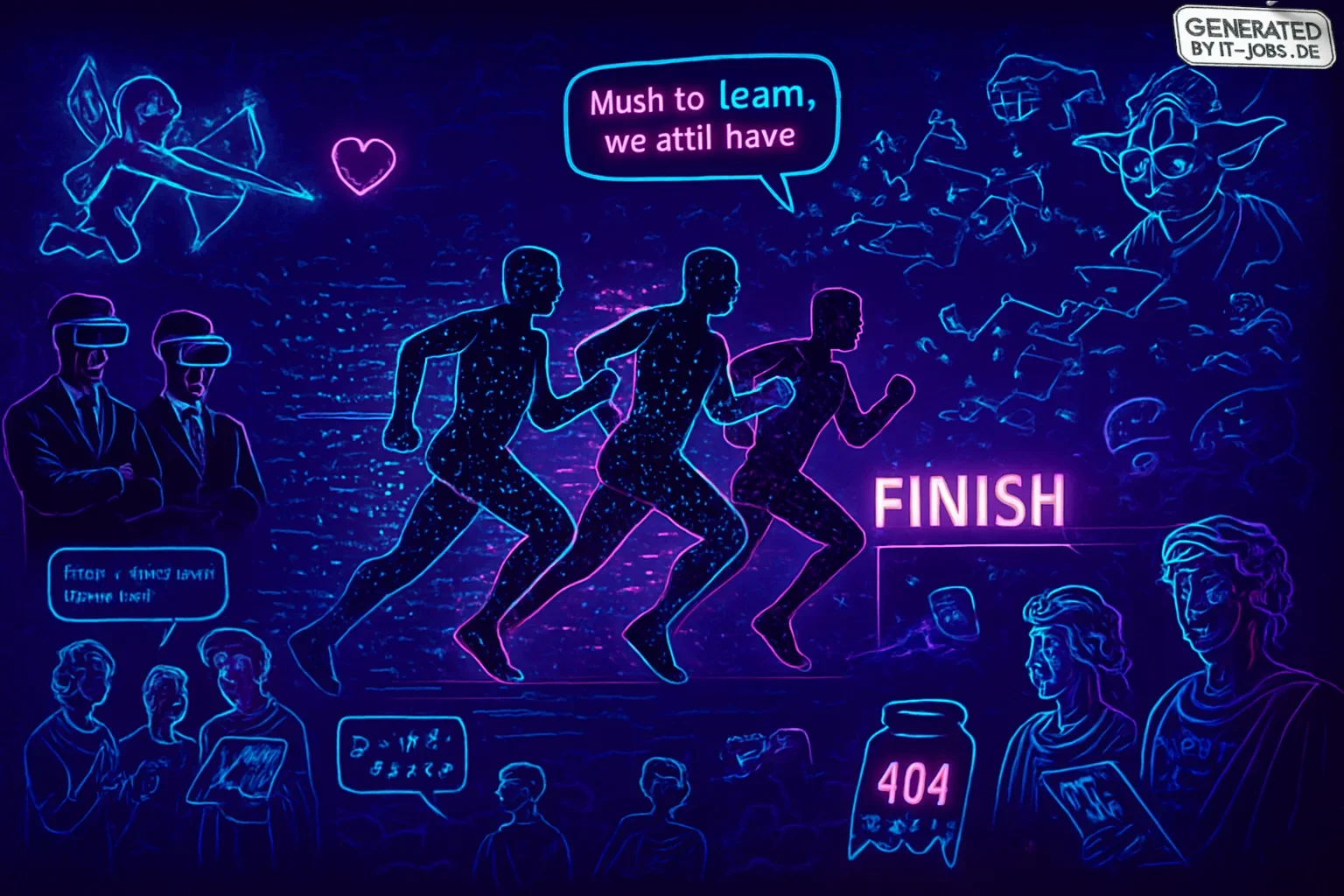
As we near the finish line of digital transformation akin to a marathon, where our legs feel jelly-like but exhilaratingly powerful, one thing stands clear: AI specialists are on track, setting personal records as the hidden heroes reshaping our beloved sports landscape. Picture them as the covert agents of the sports world, ingeniously operating behind the curtains, sashaying through streams of algorithms and hypnotizing volumes of data with the finesse of World Cup legends twirling corners into the net. Indeed, they’ve embarked on the Herculean mission of redefining athlete training, orchestrating coaching symphonies, and thrilling fans in unparalleled ways—all while mastering the art of not breaking a single – Error 404: Sweat Not Found.
Their role is almost like the modern-day tech version of a Greek chorus. They aren’t merely passive observers: they're rewriting plots, driving the narrative using predictive soothsaying models that balance performance metrics as gracefully as an acrobat on a tightrope made of quantum physics. Think of them as the Oracles of Delphi with a penchant for Python and machine learning algorithms, spinning digital prophecies that smell suspiciously like winning strategies and outlandish victories.
Yet beyond just strategic playbooks and custom-brewed training regimens, AI has opened up new frontiers for personalizing fan experiences. Think AI specialists working like digital cupids, matchmaking data with human emotion to create forever-love sagas between ardent fans and their esteemed teams. From bespoke content that wraps fans in a hug akin to the warmth of their favorite jersey, to AI-juiced virtual realities that bring the full-throttle experience of stadium madness to living rooms globally, physical barriers dissolve faster than sugar in a cup of coffee.
But let’s not sugarcoat; every epic tale has its plot twists and ominous caveats. As AI deepens its embrace in the sports world, ethical ponderings on privacy, biases, and fairness peek from shadowy crevices demanding illumination. Therefore, AI specialists are not merely engineers—they're guardians, charged with enshrining the technological realm with fairness and equity as they whip science into form.
In conclusion, as our AI virtuosos persist in amplifying the offerings of AI in the sports domain, they teeter on the cusp of a revolution, pushing the boundaries of improvement in performance and engagement. As this digital epic continues to unfold, one timeless fact resonates—sports rules are not just being rewritten; they are being reimagined, adorned with the flourish of AI wizardry. And in the immortal words of our wise mentor Yoda, "Much to learn, we still have." So let's lift our virtual pom-poms for our AI specialists as they face the future head-on with unparalleled gusto and innovation, remembering that this game, my friends, waves no final whistle.